
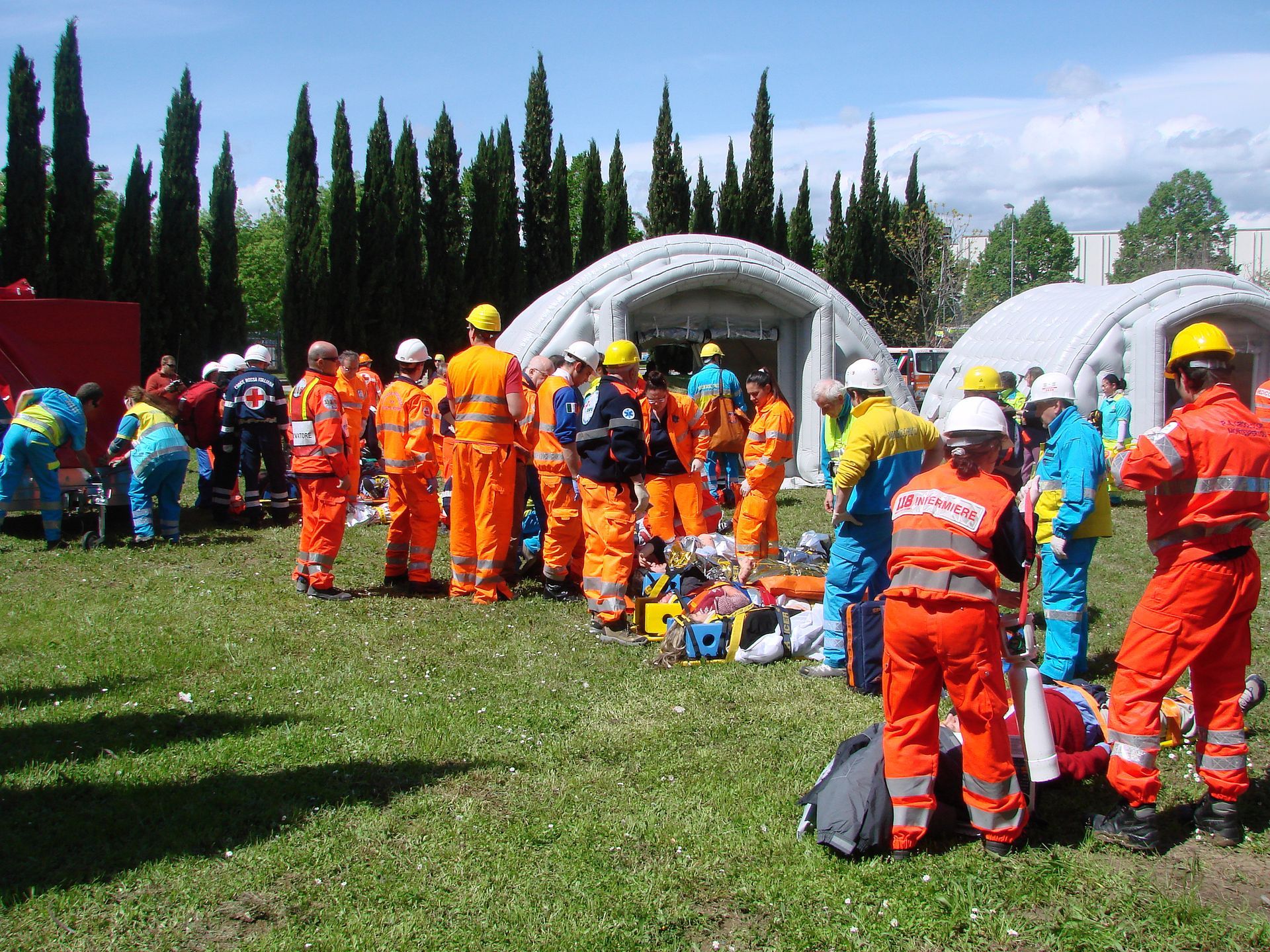

Reacting to a Community Tragedy

Jeff McHugh • June 15, 2014

If you are in the United States, chances are good that you will have to prepare a show around a mass shooting spree somewhere in your listening area, if you haven’t already done so.

It’s happened in my hometown – again.

On Wednesday, I was on the MAX train, on the way to visit Tanya, Hannah and Mike at Live 955 in Portland when news broke that a shooting was underway at Reynolds High School.

In December 2012, a shooter at nearby Clackamas Town Center killed three people, including my friend Steve Forsyth from Entercom Radio.

Do the math. Since the Sandy Hook school shootings on December 14, 2012 there have been 74 similar shootings. That’s a mass execution about every 7.48 days.

And while shooting sprees are mostly a uniquely, embarrassingly American thing, our Canadian friends just experienced tragedy in Moncton, New Brunswick. I heard one Alberta on-air personality exclaim, “…what are we now, Texas?”

What do you do when tragedy occurs? Here are some ideas to consider as you prepare to go on-air after a shooting, natural disaster or other unfortunate event in your market.

  1. Be very careful with negativity. There will be expressions of anger, frustration and “everything is terrible,” but the shows that people remember focus mostly on healing, empathy and compassion. Take the high road.
  2. Be very careful with opinion. You may personally believe that we need fewer guns, or you may believe that we need more guns. To be blunt you’re not an expert so no one cares, especially not right after a tragedy.
  3. Tell stories instead. What experiences do you have that relate to this event? Have you ever encountered a person with a gun? Ever encountered a dangerous mentally ill person?
  4. What stories can we share about overcoming traumatic experiences? How did someone recover from rape, a shooting, military action? How can you uplift your listeners with stories about how “it gets better?”
  5. Get local TV reporters on the air to share their stories about covering the tragedy? What did they see? What did they hear, feel, touch?
  6. Contact eyewitnesses through social media and get them on-air to share their experience? Live 955 was searching Twitter for students and teachers to talk to.
  7. Get a counselor on the air to talk about rebounding from a tragedy. Discuss how we can learn how to spot someone who is troubled and needs help.

Some of our previous articles on this subject include A Tragedy Has Happened; How Do You Handle It On Your Show?

Good luck out there and don’t forget to duck.


Photo Credit: UCL Mathematical/Flickr


Share this article

Recent Posts

By Randy Lane • September 29, 2026
When I start coaching a show, talents often say:“Nobody calls anymore.” Or: “Listeners in this market don’t call radio shows.” My response is, “That’s interesting, because several of our shows get more calls than they need.” The difference isn’t necessarily the market. It’s often how the show invites people into the conversation.  Airing callers and text […]

By Randy Lane • September 21, 2026
Jerry Seinfeld wrote every episode of Seinfeld longhand, on a yellow legal pad, with a blue Bic pen. He still writes that way. He’s said the flashing cursor on a screen makes him anxious, like it’s asking, “So, whaddaya got?” Why Start With Pen and Paper?Writing by hand slows you down just enough for ideas to […]

By Randy Lane • September 15, 2026
In the era of loud, fast-talking announcer DJs, my radio mentor, Todd Wallace, asked my fellow DJs and me, “Would you talk to your neighbor over the back fence like a pukey DJ or just in natural conversation?” Of course we all said we’d talk to them conversationally. Todd concluded, “Talk to listeners on air like […]
Show More