

Take the Ben and Jerry’s Test

Jeff McHugh • January 28, 2025

One of the most popular and effective exercises I do with on-air personalities is the Ben and Jerry’s Exercise.

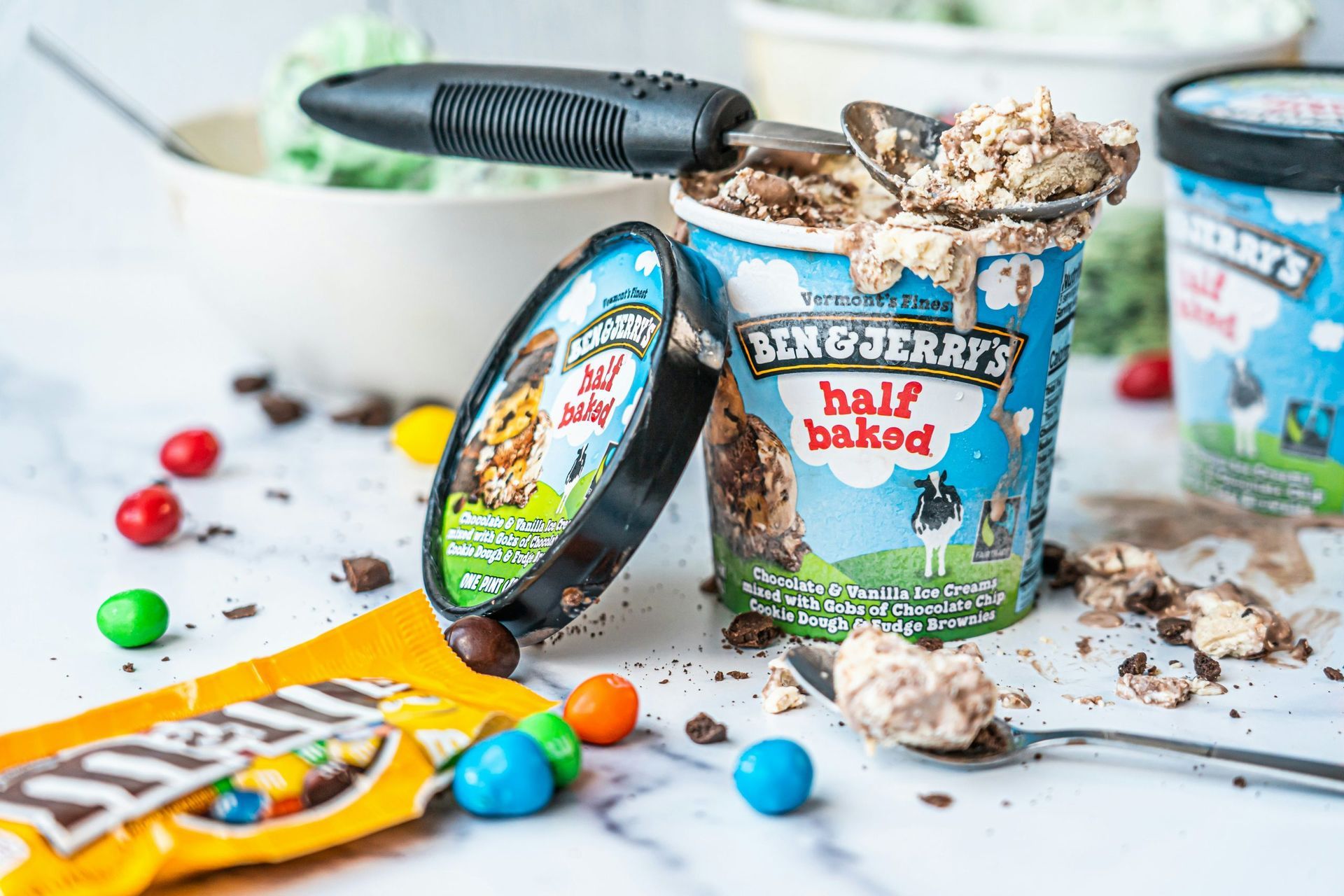
It is based on a story I heard about Ben and Jerry’s ice cream and how they checked quality in the company’s early days.

Ben Cohen and Jerry Greenfield loved experimenting with new recipes. Still, they set a high bar for their product, eventually establishing a  flavor graveyard  for ice cream that did not measure up.

Ben and Jerry also practiced  random sampling. To find minor improvements, they would grab a random pint of Chunky Monkey or whatever flavor off the factory assembly line, saw the carton in half, and observe the ice cream.

What did they notice? What’s up with all these strawberries at the bottom of the container and none at the top? Why are these chocolate brownie chunks huge, and the others are just crumbs? Those sawed-in-half ice cream pints uncovered major improvement opportunities. Plus, they got a sample of their delicious product.

I wanted to apply a random sample practice like Ben and Jerry’s to coaching radio and podcast hosts. It was so simple that I was anxious that big-name hosts and C-suite management would think I was nuts, but I went for it.

As the first meeting began, I explained Ben and Jerry’s story and that I had collected a random one-hour audio sample of their show for review. After each segment, everyone would weigh in on what they noticed.

They loved it. Despite my request that everyone start by mentioning what they liked, each participant quickly went to the flaws, mistakes, and how they could act quickly on opportunities to improve.

After doing the Ben and Jerry’s exercise a few thousand times with large, medium, and small market shows all over the US, Canada, and Mexico, I’ve noticed the top five things hosts frequently and consistently mention about their show. 

1. “That went too long” 

It is the number one observation by far. In today’s Tik-Tok attention span world, less is more. “What would you cut” is a focusing follow-up question, and responses include:

•    Over-emphasis on information, inanimate objects, or events.
•    Excessive information like dates and addresses.
•    Long segment intros or redundant sponsor mentions.

2. “I stumbled”

In today’s media content world, a lack of preparation stands out, as if someone is wearing an expensive shirt they forgot to iron.  

•    Obvious searching for words
•    Weak language like, “um,” “like,” “so,” “right?”
•    Repetition or “mowing the same grass twice.”  
•    Meandering conversational tangents.
•    Talk-over and interruptions.
•    Lack of clarity, names, and ideas not explained fully to new listeners.
•    Lack of confidence in their voice tone

3. “I was bored”

Sameness is dull. Pacing, pattern disruptions, and dynamic shifts in a segment add energy and keep the audience’s attention. 

•    Conventional setup with station name, slogan, song back-sells, time, temperature, sponsor mentions upfront
•    Auto-pilot, rote delivery of liner card information
•    High-word count hosts dominating the show
•    No audio, sound clips, or sound effects to add theatre

4. “Who cares?”

“I didn’t laugh. I wasn’t moved. I didn’t feel anything.” Unengaging content without drama and emotional resonance doesn’t cut it.

•    Is there an app for that? Weather, traffic, scores. Information and opinion spoil faster than a tuna sandwich in the sun.

•    Name the emotion felt in the segment: mad, glad, sad, or afraid. If no emotion is felt, consider how to add emotion next time.

•    People vs things. A score, rank, list, or survey is a number. A physical thing by itself carries no emotion. 

•    Nothing at stake. Nothing is at risk. No conflict. 

5. “Anyone could have done that segment.”  

Generic presenters who withhold their authentic selves from the audience were the norm in the days of Dick Clark’s American Bandstand. Today’s media audiences expect unfiltered personalities, including flaws and quirks, and do not trust polish and perfection. 

•    Share a personal experience or story that relates to the topic.
•    Express emotion using vocal range and emotion words.
•    Speak the thoughts and realizations that most people hold back as they occur.
•    Give a strong opinion. Take a stand. Keep it brief.
•    Encourage ensemble character development. The days of one big-name host surrounded by less interesting cohosts in the background are waning.

What would your team notice when reviewing a randomly selected sample of audio? One of these things, or something different?

The secret to a standout radio show or podcast is a combination of emotional impact, authentic hosts, carefully chosen content, precise execution, and touches of improvisation.

Photo by  Hybrid Storytellers  on  Unsplash

Share this article

Recent Posts

By Randy Lane • September 29, 2026
When I start coaching a show, talents often say:“Nobody calls anymore.” Or: “Listeners in this market don’t call radio shows.” My response is, “That’s interesting, because several of our shows get more calls than they need.” The difference isn’t necessarily the market. It’s often how the show invites people into the conversation.  Airing callers and text […]

By Randy Lane • September 21, 2026
Jerry Seinfeld wrote every episode of Seinfeld longhand, on a yellow legal pad, with a blue Bic pen. He still writes that way. He’s said the flashing cursor on a screen makes him anxious, like it’s asking, “So, whaddaya got?” Why Start With Pen and Paper?Writing by hand slows you down just enough for ideas to […]

By Randy Lane • September 15, 2026
In the era of loud, fast-talking announcer DJs, my radio mentor, Todd Wallace, asked my fellow DJs and me, “Would you talk to your neighbor over the back fence like a pukey DJ or just in natural conversation?” Of course we all said we’d talk to them conversationally. Todd concluded, “Talk to listeners on air like […]
Show More